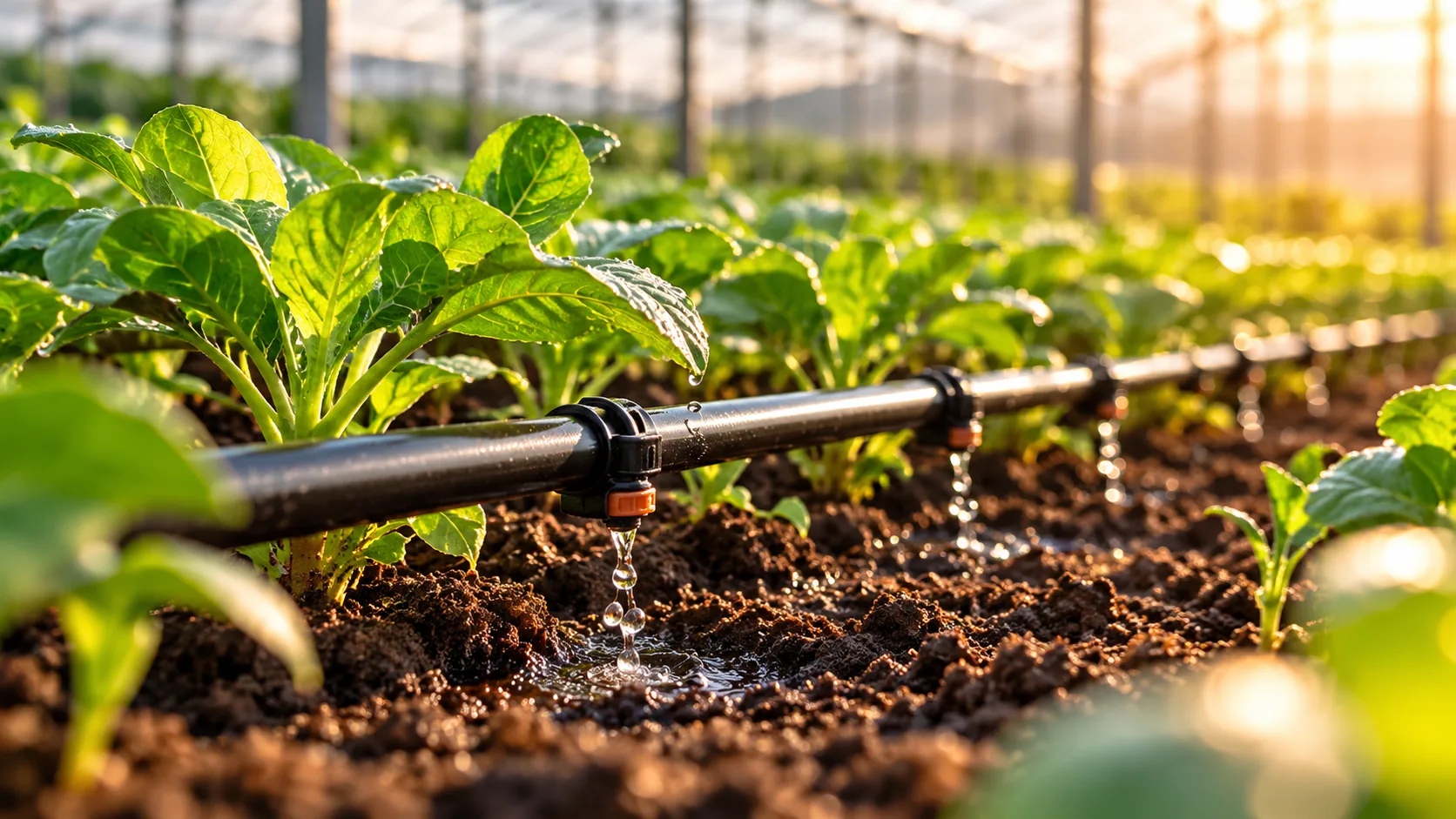
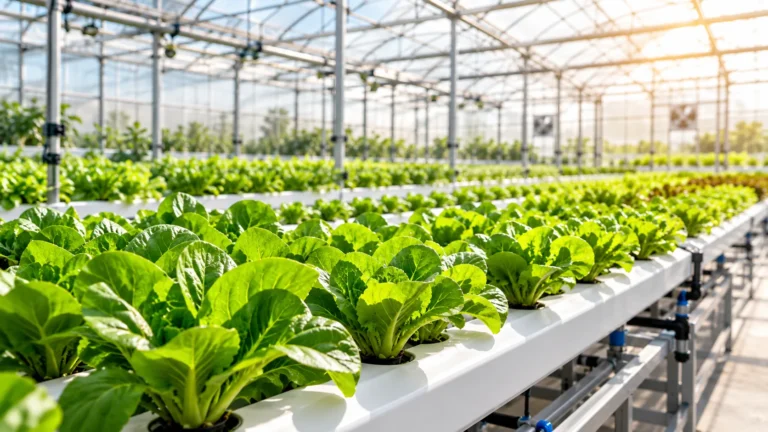
In an arid climate, how you apply water matters as much as how much you apply. Drip irrigation delivers water slowly and directly to the root zone, which is why it has become the standard for efficient growing in the region.
Why drip suits arid conditions
- Water goes to the roots instead of the spaces between plants, so less is lost to evaporation and runoff.
- Foliage stays drier than with overhead watering, which helps limit some leaf diseases.
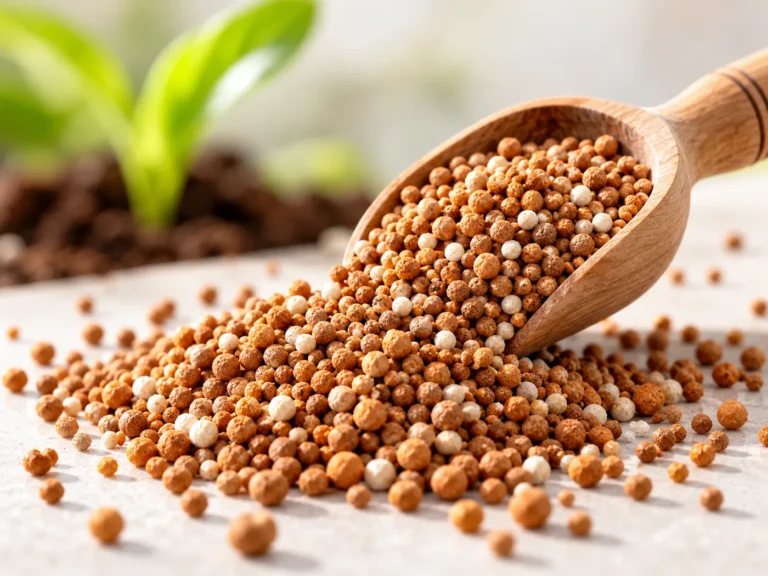
- Nutrients can be delivered through the same lines, a practice known as fertigation.
The main components
- Water source and pump to supply the system at a steady pressure.
- Filter to remove particles that could block the emitters.
- Pressure regulator to keep the lines within their working range.
- Main and sub-main pipes to carry water across the plot.
- Drip tape or driplines with built-in emitters, laid along the crop rows.
- Valves, fittings and end caps to control and close the system.
Choosing drip tape
Four details decide whether a tape fits your crop. Diameter must match your fittings, and 16 mm is a common size. Emitter spacing should suit your plant spacing and soil, with closer spacing often used on sandy soils where water moves down more than sideways. Flow rate determines how quickly water is applied. Wall thickness affects durability: thinner tape is typically used for a single season, while thicker tape is chosen for longer use.
Keeping the system working
- Never skip filtration, especially when using well water.
- Flush the lines regularly by opening the ends.
- Walk the rows and check for leaks and blocked emitters.
- Irrigate in the early morning or evening, when evaporation is lowest.
- Adjust your schedule as the crop grows and the weather changes.
See our irrigation and fertigation range, or request a quotation for a full system.